Tuesday, December 29, 2015

OpenMRS Summit 2015. Not for the faint hearted!!!


As an old timer who's been there and seen that, I can tell you that every OpenMRS meeting is ALLWAYS unique - nothing goes exactly the way you planned it, or expected to see it happen. Every experience is always different; from fantastic venues to successful implementers and star contributors, you always meet someone or something that takes your breath away.

Flying into Singapore for Summit 2015, I was already very very exhausted. It didn’t matter what I would accomplish over the next few days; nothing could possibly surpass the fact that I had written a four page scientific paper and a five page research paper entirely in transit, and without a pinch of internet. I had also figured out that this would be my 'official' old timer year - this was the meeting where I was going to sit in the back row and smile at the passionate first timers, and talk about the good old days with Jeremy Keiper and the first ever OpenMRS couple, the Seymours.

Thankfully, I was also experienced enough to know that of course, this wasn’t how it was going to turn out, because that's the first rule of conferencing - nothing happens the way that you planned.

Speaking of our host country, I can say that Singapore lived up to my very very high expectations. The airport was fantastic, I didn’t need visa to get in, and everything was so so clean and orderly. And of course, everyone was so very polite, and didn’t expect tips, and gave you exact change. And don't even get me started on the internet. In many ways, Singapore was a wonderful destination to all attendees.

Summit wise, I was looking forward to meet a few folks - notably the Harshas' (ha, sorry, but that's your nickname now). Its' interesting that I had worked with Harsha Kumara for so many years, but hadn't met him in person even once! And then there was Mayank, one of our students from GSoC 2014, and Daniel Kayiwa, who I hadn’t seen in over three years. And of course, there were also the unexpected meetings- Dr. Niranjan from my home base, Sri Lanka, Hong Phuc Dang from FOSSASIA, and the good old folks from Thoughtworks.

The first pe-summit day was the usual craziness of trying to memorize roads and hotels, which conference room would be used for what, etc.
Thankfully, folks at the National University of Singapore took a lot of trouble to help us, which was greatly appreciated.

In terms of sessions, I was mostly impressed / interested by those on Clinical Decision Support (CDS) and OpenMRS Education (which I had to organize), local community forming and the Women in Technology (which I took part in).

I was also greatly impressed by the quality and turnout for the lightning talks and PowerPoint Karaoke sessions, but as the organizer, I feel that I may have been a bit biased in these choices :)

Last but not least, there were happy times spent at the Ramen Champion (kids, eat healthy, Ramen is NOT for you!) ogling things that I could not buy at various tech malls, and the joys of rooming with Joaquin Blaya, who wrote me a fantastic recommendation letter for grad school (we'll agree not to blame him for that mess ;)

 However, all said and done, the important part of a conference is, 'what did you walk away with? Why was the summit important to you?'

In my case, the summit helped me discuss a lot of work to come, and paved the way for several potential collaborations. Also, wish me luck as I start discussions on what may become my first ever implementation! (more details yet to come!)


Friday, June 22, 2012

How to be a better GSOC Student : A list of helpful tit-bits from my GSOC experience


Its been over an year since I started work on my first GSOC project. Over the past year, I’ve been lucky enough to get a first hand insight into how Open Source works, and how we may benefit from it.
Looking back at what i’ve learnt, I want to list down a set of helpful titbits which might improve your GSOC experience.

Here goes,

  • Don’t limit your GSOC experience to your mentor and backup mentor only. Try to make as many friends as possible.

  • Don’t keep your mentor in suspense. Update him regularly, even if you have not made any progress. “I could not do anything over the weekend because I was stuck with this problem” is better than hiding from you mentor until you have something positive to report. Furthermore, updating your mentor may help him resolve your problem.

  • Some people are really busy, and may not respond to your emails promptly.  Keep this in mind, and plan for it.

  • Document everything – user requirements, problems you encountered and solutions you used to fix them. Someone is going to be very thankful to you several year later. And after all, Open source is supposed to be ‘Open’.

  • We can accept failure, but we can't accept not trying. Not trying is a definite no -no.

  • Don't come up with problems. Come up with potential solutions. Don’t say “I’m getting this exception”. Say “ i’m getting this exception which I think can be solved via the following changes...” Having a potential solution in mind tells us that you’ve done your homework.

  • Never assume anything. Always ask and confirm.

  • let's admit it, a lot of you (myself included) initially applied for GSOC because of the money. The financial rewards are attractive, but never ‘work’ for the money. Work to impress people. Think of the money only as an additional benefit.

I’ll wrap up my ‘insights’ with something really important my mentor Glen McCallum said. ToQuote,

In my opinion, successful working code is not the only objective (of GSOC). Integration to the community is the primary objective with the students having a positive real-world experience.
Is it possible to have a project that meets all functional objectives but I still consider the project unsuccessful? Definitely, yes.
Is it possible to have a student project that does not accomplish the functional objectives but still I consider the project a huge success? Yes, absolutely.”

Some of you may be worried about the progress of your project. If so, don't forget that your coding output may amount to only a part of the evaluation. The remainder of the evaluation goes into how well you have worked with others, and become part of our community !

Sunday, February 19, 2012

I'm on the Google blog !!!


Well, I'm on the Google opensource blog again.

My article can be seen here,
http://google-opensource.blogspot.com/2012/02/road-not-taken-adventures-of-post.html?spref=fb

This is the second time I was featured in this blog, and I consider it a rare privilege to have made it here.

My first appearance on the Google blog was right after my visit to last years OpenMRS implementer meeting.
The second (and latest) item chronicles what I've gone on to do since that time.

The aim of this item is to encourage more students to continue with their mentoring organizations once the GSOC summer is over. Hopefully, my article will (in its own little way) encourage more student participation.

Of course, all the credit should go to my dear old supporters, Dr. Burke, Glen McCallum, Ben Wolfe and of course Michael Downey, who introduced me to GSOC Program manager Carol Smith and Stephanie Taylor (also of Google) in the first place.

Thanks everyone, I wouldn't have been able to make it this far without you !!!

Saturday, February 4, 2012

I'm in the latest edition of the FOSS USER LK magazine !!!


The title of this post says it all. :-)

An article I wrote on FOSS and community involvement has made it to the latest
FOSS user mag edition.

To download it, go here,
to read it online, go here,

In this article, I argued the following viewpoints,

1. Most Asian students consider GSOC as a 'get rich quick' scheme.
2. When a majority of Asian students say that they are involved in FOSS, they
really mean that they have taken part in GSOC.
3. Many Asian students consider FOSS as a 'seasonal' event which revolves around
the GSOC Summer period
4. vary few GSOC students actually continue with their projects once the summer
is over
5. Some Asian students will keep on doing GSOC projects year in and year out,
and wont care to take up a bigger community role no matter how experienced they
become.

I feel that these are major faults of many of our students. I highlighted them
in my article to our own Sri Lankan students.
I hope that my message will help improve their own involvement, and encourage
them to take up more community responsibility :-)

Thursday, February 2, 2012

Making Progress !

Its been almost six months since I started writing this blog, and I feel that I've made much much progress during this time.
To start off, my knowledge base has really improved. There used to be times when I didn't understand most of the conversations the big guys were having. Things have changed very much for the better since then.
Right now I can not only understand what being said, but I can also provide some sort of contribution to these conversations as well.
I can also say that attending all these conferences have greatly improved my professionalism. I'm not a newbie anymore. Of course, some people out there think that conferences are an excuse for free food, travel and naps while someone else does the talking.
However I've learnt that conferences are one of the MOST important things that help you gap the bridge from amateur to professional.
I'm not trying to say that i'm the total professional now (still a long way to go before I can say that). But I feel that I've made tremendous progress. I'm no longer shy around people, and I've built up the knack of paying constant attention to the speakers. I've also become quite good at asking meaningful questions. In fact, I was one of the most prominent question guys at the last two conferences.

Back at the home front, I also seem to have made some progress in the work I've been involved in. For starters, I've become more involved in implementations (AMPATH) and of course, my favorite, patientmatching.
There are some more projects in the pipeline, but I wont talk about them until they get moving.

And also, I've just realized that I had stopped being the smallest guy at OpenMRS some time ago. There are more new people coming in, so I'ts beginning to look like i'm not a newbie anymore :-)

One more interesting fact. I was talking to Joaquin a few days back, and we were joking about conferences and papers etc. etc.
I told Joaquin that I was catching up with him. He has published about 100 or so papers, so with my two already published, I only need 98 more to beat him  ! :-D


Monday, January 30, 2012

The Third International eHealth Conference 2012, Pakistan

I presented my first ever research paper at the Third International eHealth Conference 2012 organized by the eHealth Association of Pakistan.
It was extremely fitting that Dr. Burke was the co-author of my first paper, since I wouldnt have got to do any of these things if not for him anyway.
The entire effort was spearheaded by Glen McCallum, who is a great source of inspiration, and always gives me excellent advice.
The conference website can be found here.
Basically, this was the third eHealth conference to be held.
It was held at the city of Lahore on the 21st and 22nd of January. I travelled to Lahore via India.

My flight plan was something like this -
Colombo -> Delhi -> Amritsar
From Amritsar take the bus across the border, and arrived at Lahore.
The return journey was also similar (with a few hiccups)

Planning the journey was quite daunting, as I had to secure both Indian and Pakistani visas.
Fortunately, Dr. Burke funded my journey, so that was a major load off my back. In fact, I would not have been able to attend the event if not for him.
If I got to Pakistan thanks to Dr. Burke, then I returned thanks to Glen, because he stepped in to solve a sudden emergency (flight problem) that I faced. If not for him, I'd probably still be stranded in Pakistan.

However, i'd say that the entire conference was an outstanding success, and totally worth the effort. I learnt many things on regional healthcare services / informatics. In fact, it was a real eye opener.
I also made very many friends from the Aga Khan University (Karachi) during my stay.

Saturday, January 28, 2012

How did I present two papers in just under a week ?

I guess that many people are wondering how I did this, so here goes,

Firsly, I identified the need to publish papers following conversations with my good friends / advisors / mentors Glen, Dr. Burke and Joaquin of HST.
Professor Szolovits also recommended that I do so, as many people tend to do a lot of hard work, but fail to publish on anything that result from their efforts.
I always like to set targets to what I do, and in the case of research papers, Joaquin  (or more correctly, Dr. Joaquin) was my target. If you look at his CV (see here) you'll see that he has published an incredible number of top quality papers.

So one day I saw a mail on the OpenMRS mailing list calling for sumbissions for the eHealth conference 2012 (Pakistan) and so I jusmped at the chance to have a go.
I co authored a paper with Dr. Burke on FOSS solutions for healthcare. The paper studies why FOSS healthcare solutions can fail, and proposes a series of guidelines for implementors who are planning to take up FOSS helthcare. It was a very detailed research paper, and took up a lot of time, effort and dedication.


However, even as I was working on this paper I had the worry, 'ok, lets say that this paper is acepted. Even so, how can I actually make it to Pakistan to present it ? I don't have any money'.
I contacted my personal think tank, ex- Oracle manager and vissionary Glen McCallum. His advice was, 'think of that later, funding opportunities may be available. Focus on the paper for now.'

Naturally, I took his advice.

However, one week later I saw on a notice board that Sri lanka is going to have our own tech conference soon, and that there has been a call for papers. Of course I'll definitely be able to attend a local conference, so I quickly decided to work on another paper as well.
Of course, it was not quite that easy. I had to come up with a good topic.
Well, as luck would have it I realized that there was some quality research I had done a few months back, which was extremely suitable for publication due to its novelity as well as its relevance to a Sri lankan context.
So I wrote the paper, and submitted it as well.  Dr. Kulari Lokuge,one of my old teachers (currently with Swinburnne University, Aussie) was my co-author.
It was very hard work, writing two papers with such short notice, and I had to really push myself, but I finally managed to get it done.

But enough for this post. The rest of the selection process and other news will go into another post....


Friday, January 27, 2012

I just presented my second paper !


Updating my blog after a long time.

Looking at the title of my post, you'll guess that something major has been happening over the past month. Well, you're right. Not only did I present my first research paper, but went ahead and presented my second as well.
In fact, I only just returned home from presenting my second paper.
My second paper was presented at the NCTM 2012 conference Sri Lanka.

The conference website is : http://www.nctmsl.com/

My research paper was on EMR systems and rehabilitation treatment. It was a very pertinent paper from the Sri Lankan perspective, especilly as we are only just recovering from a war, and there are many disabled people in need of rehabilitation and therapy.
I feel that my paper was well received. It was also a major achievement for me.

So now you will ask, "wait, what about the first paper?"

Well that, my friend, belongs to another post. Also, I plan to post a more detailed description on my second paper as well. But I'm too tired to write any more now. Incredible as it may seem, I've been sleeping somewhere around just four hours a day for the past week or so !!

Nothing good comes easy :-)


Monday, December 19, 2011

PTM-47

A quick update on what I'll be working on over the next few days.

James, Dr. Shaun, Ada and I had a call regarding PTM 47, which is aimed at moving the patientmatching module reports from a flat file system to the database.
This is going to be a complex task, but I feel that our call ironed out a lot of issues / complications that we were facing.
We are going to move the files into the database in two major stages. This will be keeping me very busy over the next few weeks.

More details on the ticket can be found here.

Sunday, December 18, 2011

I've been published in the Sunday Observer !!

Some more (slightly delayed) good news.

A article on myself and my OpenMRS work was published in this weeks Sunday Observer.
Now for those of you who don't know, the Sunday observer is Sri Lankas leading State owned English newspaper.
As I remember, their circulation is about 0.5 million copies (which is a very big deal in a country such as Sri Lanka.)
Basically, the article covers my comments on my OpenMRS work, and also some tips / hints on working in the community.
In fact, its the very same article on myself that was published in the IIT Student magazine. I cant remember if I ever blogged on that article, but let me check up on that.
I'm still looking for an online version of this item, but failing to find one, Ill upload a photo of the article.
But anyway, this article in not an actual 'victory', but rather a report of an old victory. Lets hope there'll be lots more victories over the next year ! :-)

PS: On an unrelated note, I just remembered that one of my key concerns during my days as a writer was how much longer it would take for an article about myself (as opposed to an article written by myself) to get published in a newspaper. Hmm...... So my pen name first appeared on a national newspaper at the age of 19. The first article about me was published when I'm 24. So, 24 -19 = 5  years :-)

Sunday, December 11, 2011

Mutual Scoring enhancements are committed !!

So, finally, after months of sweat and toil, Mutual Scoring (or MI for short) was committed today.

To me, this represents a major milestone in my internship. Firstly, it marks my involvement in real research work   with the top minds in the industry. (to put it more clearly, I can now say that I've "been there, done that, and got the tee shirt"). Secondly, it marks  my commitment to this industry, and what it has to offer, and finally, that i'm doing my best to follow the advice given by Professor Szolovits, and am following in at least the general direction that he suggested.

Of course, I admit that there is a lot more that I can do, but I still have two more years until I graduate, so hopefully I'll get better.

You're welcome to check out the changes in the patientMatching module.  Right now, these enhancements are very 'nerd' friendly, but not very user friendly.
I'm planning to take care of that along with the second phase of mutual scoring, which i'm hoping to start work on as soon as I take care of a few course works. (mustn't forget that I have to finish my degree as well :-)

So right now, I can happily say that phase one of MI scoring is over, and I can return to the drawing board for phase two.

Im indebted to the support given by Dr. Grannis (THE Dr. Shaun Grannis) and James Egg of Regenstrief.. I could never have done this without them.


Best Regards,

Suranga

Monday, December 5, 2011

My tee shirts have arrived !

So, as the heading says, my tee shirts arrived today. As anticipated, the Sri Lankan postal department had torn open the parcel to see if they can steal anything. Unfortunately for them, the parcel contained only items of sentimental value (I had especially asked Ada NOT to send anything valuable) So all the contents of the parcel were pretty much intact.

I got the Muzungu shirt (mentioned in previous post) an AMPATH tee shirt and finally, an awesome Regenstrief tee shirt.
The tee shirt is rather big, but I really really love it.

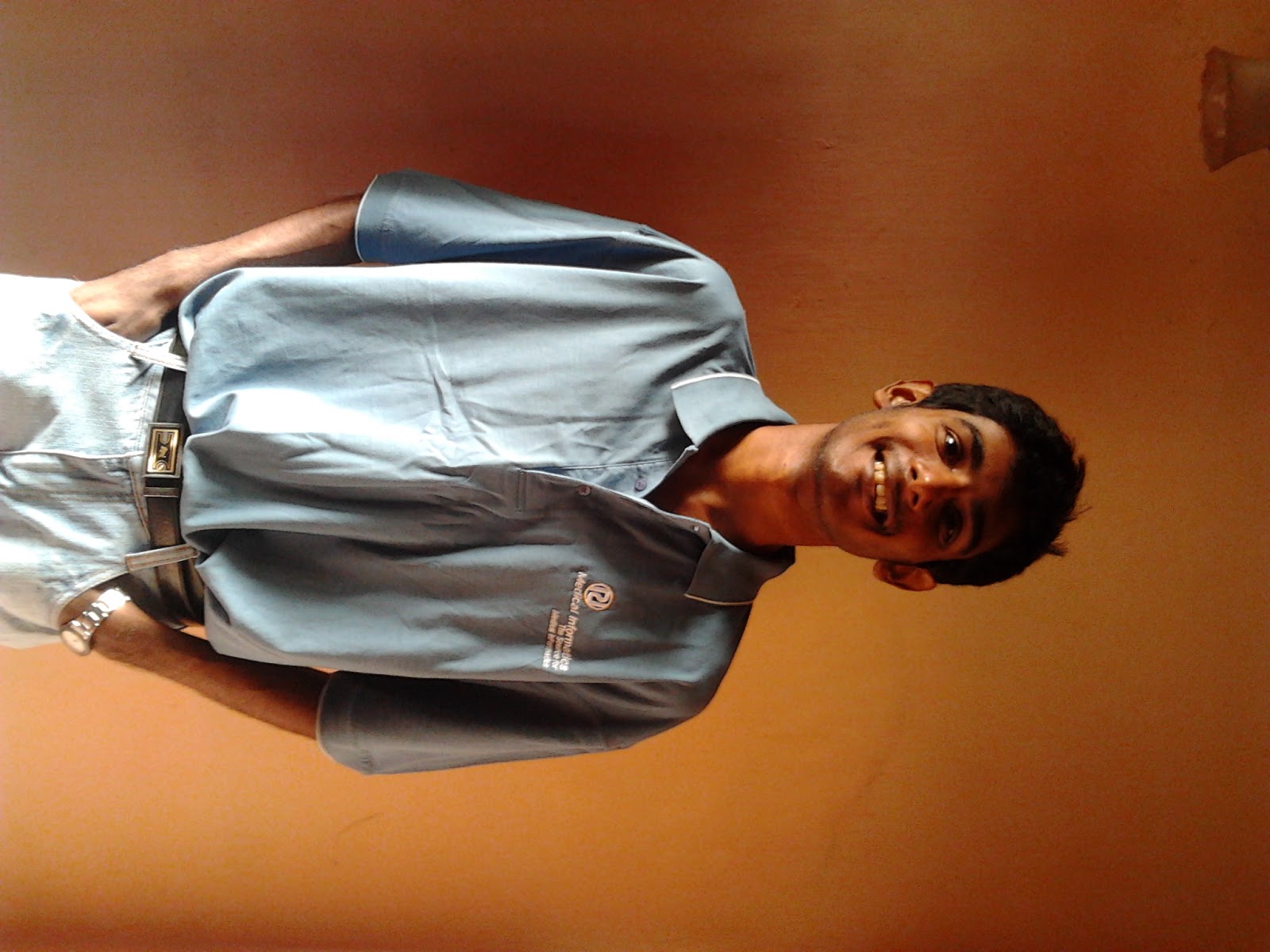
I'll post a pic of me wearing this shirt here. Please excuse my unusual apperance in this photo. It was taken shortly after I just work up :-)


Thanks to everyone who helped get the shirts from Kenya -> Indiana -> Sri Lanka !!!!!!!!!!

Tuesday, November 15, 2011

Hectic Times


I've been unable to update this blog regularly because, as you can see by my title, I've been going through hectic times.
Firstly, i'm still very much involved in AMPATH work - so much so that I've been unable to spend any time with my beloved OpenMRS core over the past month or so.
However, We've definitely making progress. Ada is even getting me an AMPATH tee shirt (So that I can say 'I've been there, and done that'. ) Poor Ben (our Director) has been asked to do the purchasing (since he's frequently flying to and fro between Eldoret and Indy).

I'm also getting an Muzungu tee shirt. Muzungu is basically African for 'the white people' (in Swahili is means 'confused person wondering about' :-D ).

 I guess Muzungu Tee shirts are somewhat of a fad of Regenstrief and PIH employees. I think its also very popular among westerners working in Africa. But anyway, I'm really looking forward to the tee shirts, and hoping that Ben wont get them in the lemon green and pink colours that he suggested :-)

Other than this, I'm also working on two other OpenMRS related projects, as part of something that Professor Solovitz of MIT suggested. Dr. Mamlin is helping me with one of these, while my favorite lecturer from IIT is helping with the other. (well, formerly IIT, and now with the Swinburne University, AUS).

Hopefully, we'll know the outcome of these efforts by Dec - Jan. But until that, its all confidential.

I'm also trying to continue with Dr. Shauns' Patient matching improvements, but its been really hard to find the free time.
And plus, my university does not understand that I'm really busy, and keeps assigning Course works.

Oh well.......


Friday, November 11, 2011

My work with AMPATH - Part two

                     
It's been some time since I published part 1 of my AMPATH story. I couldn't follow up with part two because the project is still very much ongoing, and I've only just committed the latest changes....


But let me try to pick up this story where I left off, and write at least a chapter or so on our progress.


Well, (resuming our narrative...) Ada tried out my new omod on an openmrs server, and sure enough it worked.
So she went ahead and uploaded the new module to the AMPATH research server, and suddenly it did not work.


The error was as follows,


Error Starting Module – Patient Matching
Error while trying to start module
Error while running sql: DROP TABLE IF EXISTS `openmrs`.`persistreportdata` . Message: DROP command denied to user 'amrs_user'@'localhost' for table 'persistreportdata'

I has just started digging into this problem when I got a mail from Win (Nyoman Ribeka) a Regenstrief developer and one of the fist contributors (well, actually THE first contributor) to the patientmatching module.

Apparently Ada had forwarded him the stack trace, and it had taken Win all of five minutes to come up with the solution.

The problem was that we had tested out the fixes using an 'openmrs' database, while the  AMPATH database was named 'amrs' ! . The issue was being caused by a database dependent code snippet that had somehow by-passed our vigorous code review process.

So naturally our fixes worked on the openmrs test environment, and crashed on the AMPATH environment.

But anyway, it was quite easy to fix once we understood the cause. we traced the faulty code to the sqldiff file ( an SQL inset into statement had the database name 'openmrs' prepended to the end. This was unnecessary, and was causing our problems. )

So I fixed it, tested it out and sent Ada the latest omod...

And was that the end of our problems ? not quite, 

But that is for later. Do stay tuned for part -3 !

Thursday, November 3, 2011

My work with AMPATH - Part one


I've been busy working with AMPATH engineers over the past week. We did a lot of important work to help AMPATH switch to the latest patient Matching module, and I'm happy to have played a role in getting this up and running.

For all of you who don't know what AMPATH is, its practically one of OpenMRS's birthplaces. For more details, please visit here.

It all started off after I got a mail from Dr. Shaun (THE Dr. Shaun from Regenstrief) asking if I could help the AMPATH people upgrade their system to the latest patient matching release. basically, AMPATH was using OpenMRS 1.8.2, and wanted to move on to the latest version of our module (which was supposed to be 1.2.2, but ultimately turned out to be 1.2.4 due to all the changes that we made)

Naturally, I was pleased to jump in and help out (who wouldn't ?)

So I contacted Ada (Ada Yeung, who works with AMPATH)  got access to AMPATH test server, and started checking out the system. Unfortunately, the test server was somewhat muddled up, mainly due to the large number of tomcat and OpenMRS modules installed everywhere.

So I contacted James (James Egg from Regenstrief) sorted everything out, upgraded the test server and got the latest running. The Upgrading process went pretty smoothly ( You will really admire the OpenMRS design once you see how easy it is to switch to - fro and upgrade with a live DB) and I didnt have any data problems at all.

So I went ahead and fixed a number of major showstoppers.

Dr. Shaun and Ada were very happy with my work, especially with the bug fixes.

So I committed the new changes, and stood down for the testing to begin.

And so was that the end of the story ? oh no, this was just the beginning. It all got pretty complicated after that...

Expect the full details in the next blog post !!!!


Thursday, October 27, 2011

I've just been published by Google

A quick post to say that I've been published on the Google blog.

More specifically, an article I wrote on my experience at the OpenMRS implementer conference was published on the Google opensource blog.

This is a really big deal to me, since its the first time I have been singly picked out by Google. However a lot of the credit should go to my good friend Michael Downey, who actually spearhearded the entire effort. If it wasn't for him, I'd be just another boring old student.

The article appears here (http://google-opensource.blogspot.com/2011/10/openmrs-welcomes-with-open-arms.html)

Its been modified slightly so that none technical people can understand it better, but otherwise its pretty much the same.

PS: I can honestly say that this is the "one small step for me, one huge step for my future" moment of my career.

Thank you Michael !!!!!

Thursday, October 20, 2011

OpenMRS patient Matching module

I've recently started work on the OpenMRS patient Matching module. Its a complex and intriguing piece of software planned by Dr. Shaun Grannis of the Regenstrief institute.

Dr. Shaun is qualified in both engineering as well as medicine (he's an MIT graduate)  and his mathematical training came really helpful in my efforts. I'm also being helped by James Egg, also of the Regenstrief institute. He has been a great help with design planning and domain expertise.

I also found out that Win (Nyoman Ribeka) of OpenMRS had initially got involved in OpenMRS working on the PatientMatching module as a gsoc student ! (this was in 2008)

My work on the module is aimed at calculating mutual information scores for pairwise combinations of columns. This will ultimately make the matching algorithm more efficient.

The work is quite challenging, but intriguing and interesting. I have already made much progress in my work.

for further reference, documentation on the module is available on the wiki here

Credit must also go to Gautami, a fellow Gsoc student who worked on this module during Gsoc 2011.


Meeting the OpenMRS community at Kigali, Rwanda

I've been unable to post much on my blog recently. The reason for this was that I was away at Kigali, Rwanda, attending the annual OpenMRS implementer conference.
So much things happened there that I've been tied up with a lot of important //TO DOs that kept me busy for a while.

but first and foremost, I'd like to share an article I wrote on the event. This was posted on the OpenMRS blog here.

However i'm re posting it here because I really like it. Enjoy !


Google Summer of Code Student Meets the OpenMRS Community

Recently, I had the rare privilege of attending the annual implementers conference of OpenMRS, my Google Summer of Code (GSoC) mentoring organization.
Thanks largely to the conference sponsorship by Google, OpenMRS was able to fund my week-long visit to Kigali, Rwanda. I travelled over 4,500 miles to Rwanda, and spent a week meeting with core OpenMRS developers, other volunteers, implementers, service providers and researchers who had gathered there for the conference.
OpenMRS Implementers Meeting 2011
Arriving at Kigali, I was amazed at the diversity and fellowship amongst the community, and of how happy they were to accept me as their own.
I took part in a pre-conference hackathon, and visited the OpenMRS implementation at Rwanda’s TRAC Plus health clinic. I listened to why implementers from Village Health Works used an Access database for their Burundi clinic, and to Dr. Joaquin Blaya’s work with Interactive Voice Response. Eduardo Jezierski, the CTO of InSTEDD, talked to me about their work in Haiti, while Christopher Bailey of the World Health Organization spoke of his experience working with developing countries.
I also enjoyed a Chinese meal with a group of US-based developers for the AMPATH program in Western Kenya. (Ben Wolfe, director of OpenMRS API Development taught me how to use chopsticks). I visited the Kigali Genocide museum, played cards with a group of research scientists, academics and other developers and spilled my drink all over a director’s laptop. I had dinner with OpenMRS co-founder Dr. Burke Mamlin, brought a drink for co-founder Dr. Paul Biondrich and had breakfast with an MIT graduate who explained why he quit building space satellites and an engineering career to enroll in medical school.
My participation at the conference was an eye opener for several reasons. Firstly, it helped me make the change from “GSOC student” to fully fledged community member. I stopped being just an offshore volunteer, and understood my organization for what it really was.
I saw my project as a community, a group of vibrant, talented and extremely capable people with a wide range of interest in software development, research, medicine, health informatics and public health. I understood that OpenMRS is not “just” OpenMRS, but a massive network of implementers, developers, healthcare workers and other organizations.
I saw the dedication and professionalism of community members, and their sincere concern to help make the world a better place. I also realized how community members were supporting themselves while enjoying what they do by serving as consultants, developers and service providers.
However, I believe that my experience at the conference highlights something that Google should definitely look into – the inability to ensure that GSoC students continue being a part of the open source community once deadlines are over. As Google clearly states on their website, GSoC is organized with the aim of encouraging students to contribute to open source projects. However it’s undeniable that many students consider GSoC as a get rich scheme for their internship year.
I feel that this is mainly due to four reasons – firstly because many GSoC students are offshore based, and see their project as yet another software, secondly because many of them consider it as a internship with strict deadlines, thirdly because they are unable to make the transition from volunteer to community member and finally because they fail to understand that open source developers have ways of making money while doing what they enjoy.
As I see, the best way that Google can avoid this is by tearing down the wall between student and community member.
Google can do this by introducing more flexible methods of student evaluation, by giving more weight to community participation in their evaluation criteria and possibly by moving up student application dates so that students can apply several months in advance, allowing the community to assess how they get up to speed on domain knowledge and technology stacks. This way, students will be familiar with their projects, the community will be aware of their capabilities and stronger ties would link the student with his organization.
Ideally, all this would happen before the student is even selected for GSoC.
Ultimately, I believe that both Google and mentoring organizations should consider methods to ensure that GSoC does not end with “successful project completion”. Also consider – why do we even get a certificate saying that we “are recognized for participating in GSoC”? It should say that we are “recognized as a successful community member” of our respective mentoring organizations.

Saturday, October 1, 2011

OpenMRS Sync module


I've been involved in the OpenMRS sync module.
We had a sprint for this a few weeks back. Basically, we were aiming to prepare it for a 1.0 release.

The sync module is  great concept. You can check it out here.

Its purpose is to let users who have multiple sites with separate databases to copy data from each other. Databases are defined as parent or child databases.
The Parent is always the computer or site that is most central. Multiple child sites send their data up to the parent site for dissemination. Children/parent sites can be set up in a multi hierarchy way.

Apparently work on the Sync module was started as far back as 2007 by Christian Allen of PIH.

Its also noteworthy that the Sync module is the first ever OpenMRS module that i'd been involved in - all my prior work was on the trunk.

Even more noteworthy, not a single one of my commits (thankfully) broke the build during the sprint .....

Thursday, September 29, 2011

OpenMRS implementers meeting 2011

I'm pleased to announce the OpenMRS implementers meeting  of 2011. 

This is an annual conference where OpenMRS contributors and implemnters meet up to share ideas, make plans and to improve ourselves and our community.

This years conference will be held in Kigali, the capital city of Rwanda.  I am able to attend because the OpenMRS project has kindly come forward to sponsor my visit. They will be taking care of my finances.

I am really looking forward to the meeting, because I will get to meet a lot of the best people in the industry. this is sure to be a great learning experience for me. Hopefully, I will also take part in the hackathon held prior to the event.

It'll be great to meet the Dev group, Ben, Darius, my dear friend Daniel, Michael and Rafa. I will also meet up with some other people from Ampath, PIH and Eldoret.

Dr. Mamlin and Dr. Biondritch will also attend. So will Dr. Hamish Fraser and Dr. Shaun Grannis of the Regenstrief institute.
It'll be great to meet all these people for the first time. 

Unfortunately, my mentor Glen McCallum will be a notable absentee at the event, so I wont be seeing him at Kigali.

PS: Not to forget Dr. Joaquin, who has a PhD from HST. He has been one of my major advisers, so I'm looking forward to meeting him as well.


See here for further details on the meeting.